
What Are Large Language Models (LLMs)? How They Work & Examples
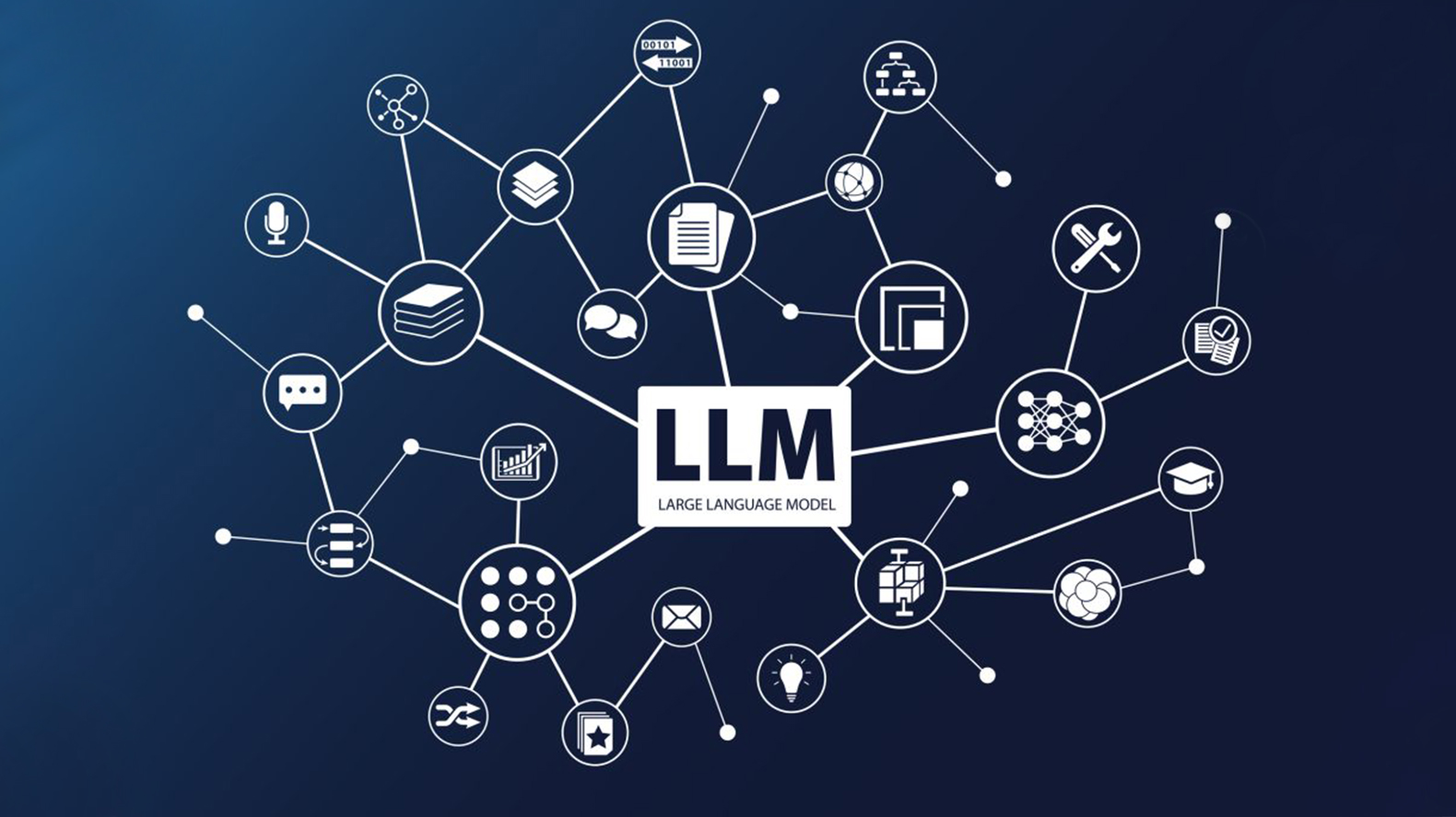
Imagine standing before a vast, digital library that doesn’t just store data. But has read and understood the nuance of every metaphor. As a result, it can debug a complex script as easily as it can deconstruct a sonnet. This isn't the plot of a sci-fi novel. It’s the reality of Large Language Models (LLMs). These computational titans have shifted the paradigm of human-computer interaction. As a result, we find ourselves moving away from rigid command-line syntax toward a world where machines speak "human" with startling fluency. From the way we search for information to the way we do things, LLMs are the invisible architects of a new era of cognitive automation.
At their core, Large Language Models represent the current pinnacle of natural language processing (NLP). They are high-capacity neural networks trained on petabytes of text. That is what enables them to recognize, summarize, translate, predict, and generate content. But to view them as mere "prediction engines" is to undersell their complexity. They are sophisticated pattern-recognition systems that have decoded the statistical structure of human thought. This post will pull back the curtain on how these models function and the transformative role of AI in DevOps. Additionally, it will explore how these digital brains are reshaping the professional landscape across every conceivable sector.
The Primary Question: What is an LLM?
A Large Language Model is a type of artificial intelligence. What sets it apart is that it is trained on massive datasets to understand and generate human-like text. The "Large" in its name refers to two specific factors. First is the volume of the training data, which is often billions of words. Second is the number of parameters within the model’s architecture. Furthermore, parameters are essentially the internal "knobs and dials." These are what the model uses to adjust its learning process to understand the relationship between words.
Unlike traditional software that follows "if-then" logic, an LLM operates on probability. When you ask an LLM a question, it isn't "thinking" in the biological sense. Instead, it is calculating the most likely sequence of tokens (words or fragments of words) that should follow your prompt based on patterns observed during training. This allows it to handle the inherent ambiguity of human language, which is often metaphorical and context-dependent.
The Engine Under the Hood: How LLMs Work
The breakthrough that made modern LLMs like GPT-4 or Claude 3 possible was the invention of the Transformer architecture. Before transformers, AI models processed text sequentially, which was slow and often led to the model "forgetting" the beginning of a long sentence by the time it reached the end.
1. The Transformer Architecture and Self-Attention
Introduced in 2017, the transformer architecture allows a model to process an entire sequence of text simultaneously. This is achieved through a mechanism called Self-Attention. Self-attention allows the model to assign different levels of "importance" to various words in a sentence. For example, in the sentence "The bank clerk told the customer that the bank was closing," the model uses self-attention to understand that the first "bank" refers to a financial institution, not a riverbank, by looking at the context of "clerk."
2. Tokenization and Embedding
Before processing, text must be converted into numbers. This starts with tokenization, where text is broken into smaller units. Furthermore, these tokens are then converted into embeddings. These are high-dimensional vectors that represent the word's meaning. Additionally, words with similar meanings are placed closer together in this mathematical "vector space." This allows the AI to understand semantic relationships.
3. Pre-training and Fine-Tuning
The lifecycle of an LLM typically involves two main stages:
- Pre-training: The model is fed a colossal dataset to learn the basic structure of language.
- Fine-Tuning: The model is receives further training on a narrower, high-quality dataset. This often includes Reinforcement Learning from Human Feedback (RLHF), where humans rank responses to ensure the AI is helpful, safe, and accurate.
Industry Examples of LLMs in Action
LLMs are no longer experimental. They are the engines driving billion-dollar industries. Each model has its own unique "personality" and specialty.
- OpenAI (GPT-4): The most recognizable multimodal model, excelling at creative writing, complex reasoning, and coding.
- Google (Gemini): It is natively multimodal by design. Furthermore, Gemini integrates deeply with Google’s ecosystem for real-time information processing.
- Meta (Llama): A game-changer for the open-source community, allowing developers to build custom AI applications without massive compute budgets.
The Strategic Role of AI in DevOps
One of the most profound applications of these models is the rise of AI in DevOps. Development and operations teams use LLMs to automate the software development lifecycle (SDLC). Furthermore, by analyzing vast amounts of log data, these models can predict system failures before they happen, a process known as AIOps.
LLMs also generate Infrastructure as Code (IaC) scripts, ensuring that server environments are set up consistently. By integrating AI in DevOps, companies reduce the "mean time to recovery" (MTTR). Additionally, they allow engineers to focus on high-level architecture rather than mundane troubleshooting. This ensures that software is not only built faster but is also more resilient to the complexities of modern cloud environments.
Real-World Use Cases: Beyond the Chatbot
While many see LLMs as fancy chatbots, their utility extends far deeper into the enterprise level.
1. Automated Coding and Debugging
Tools like GitHub Copilot act as a digital pair programmer. They suggest blocks of code, translate languages, and identify vulnerabilities. For developers, this reduces the cognitive load of syntax and allows more time for logic and design.
2. Legal and Medical Analysis
In the legal sector, LLMs read thousands of contracts to find inconsistencies. In healthcare, they assist doctors by summarizing patient histories and staying up-to-date with the latest research, ensuring no critical data is overlooked.
Challenges and Ethical Considerations
Despite their brilliance, LLMs are not without flaws. Their probabilistic nature means they can suffer from hallucinations. As a result, they can start confidently stating facts that are entirely fabricated. Furthermore, because they learn from human-generated data, they can inherit and amplify societal biases. As we move forward, the industry is focusing on "Small Language Models" (SLMs). They potentially offer high performance with a much smaller carbon footprint and better data privacy.
Scaling Your Vision with Advanced Tech
Understanding the mechanics of LLMs is only the first step; the real magic happens when you implement these technologies into your own products. The power of LLMs isn't restricted to the desktop; we are seeing a massive shift toward bringing these intelligent capabilities directly into mobile environments.
If you are looking to build the next generation of intelligent mobile applications, leveraging React Native Development is the gold standard. It allows you to integrate complex AI features, like real-time translation or intelligent assistants, into a cross-platform app that feels native on both iOS and Android. By choosing React Native Development, you ensure that your AI-powered vision reaches the widest possible audience with a polished, high-performance interface.
Future Horizons of Language Modeling
The journey of Large Language Models is a testament to human ingenuity and our quest to bridge the gap between biological and artificial intelligence. We have moved from simple rule-based systems to models that grasp the subtleties of human emotion and the complexities of quantum physics. As these models become more efficient and integrated into our daily workflows, the distinction between "human work" and "AI assistance" will continue to blur. As a result, it will lead to a collaborative era where our creative potential is vastly amplified.
In the coming years, we can expect LLMs to become even more specialized and accessible. The democratization of AI means that a small startup can now leverage the same cognitive power as a Fortune 500 company. Furthermore, by staying informed on how these systems work, from the transformer layers to the implementation of AI in DevOps. Any company can position itself not just as spectators, but as active participants in the revolution. The future isn't just about what AI can do; it's about what we can achieve when we have a digital partner that finally speaks our language.