
MEAN vs. MERN Stack: A 2026 Developer's Guide
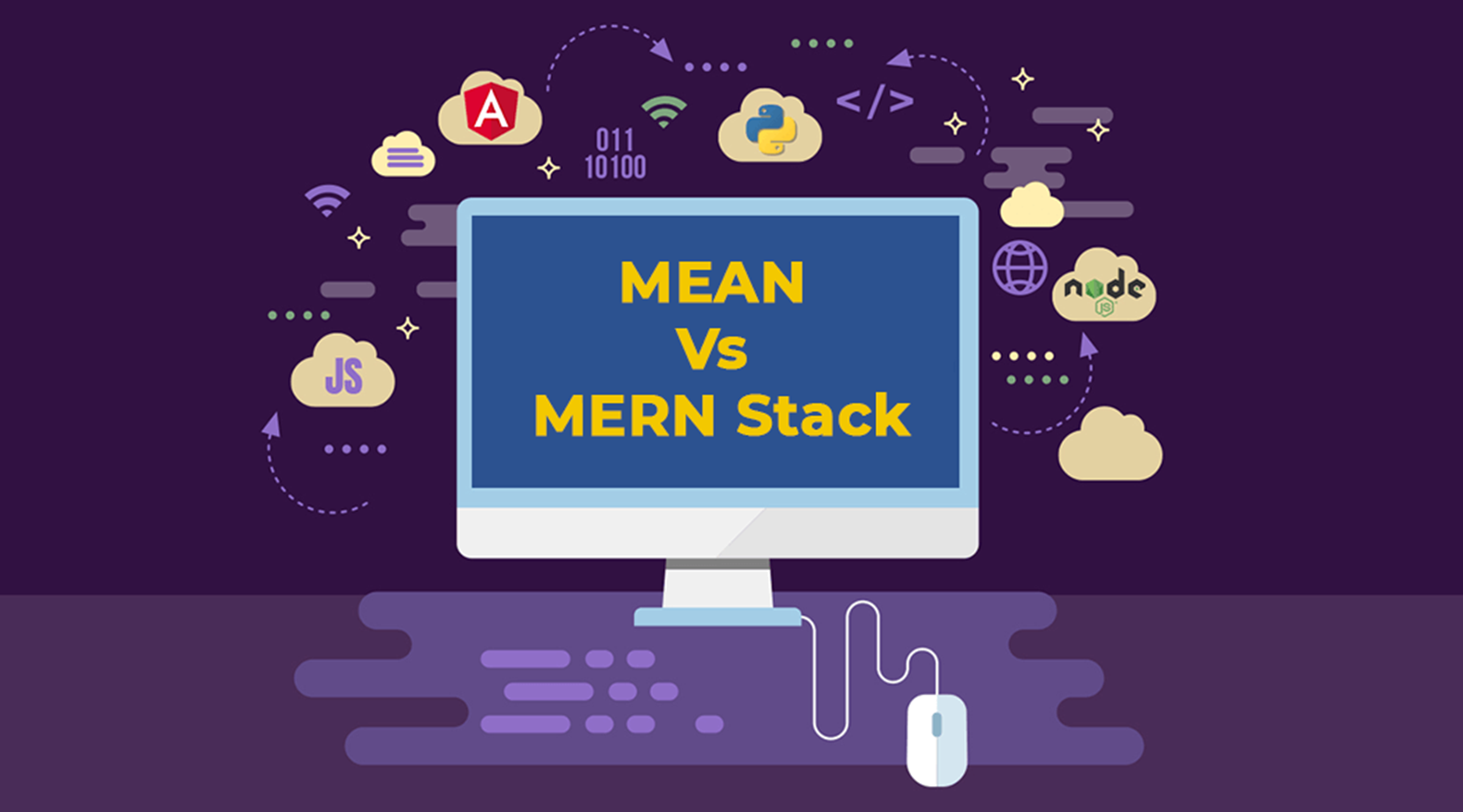
If you have spent any time in web development recently, you already know that JavaScript continues to dominate the digital world. Furthermore, whether you are building an ambitious SaaS product, an internal enterprise portal, or an AI-integrated web app, full-stack JavaScript development remains the undisputed heavyweight champion of modern web architecture.
Why is this the case? Quite simply, writing JavaScript across the entire software lifecycle, from client-side browser logic down to server-side APIs and database queries, dramatically streamlines development workflows.
However, once you decide to build a JavaScript-first application, you immediately face a pivotal fork on the road: MEAN vs. MERN stack.
Undoubtedly, both technology stacks are proven, production-grade solutions powering millions of active web applications worldwide. Yet, despite their similarities, key differences in architecture, learning curves, and scalability can make or break your product timeline.
So, in this comprehensive 2026 guide, we will systematically unpack both stacks component-by-component and thoroughly break down the Angular vs. React debate. Moreover, we will help you select the exact tech stack your project requires.
The Shared Engine: Why JavaScript Dominates Everywhere
Before analyzing the core differences, let’s first explore what makes both MEAN and MERN so extraordinarily effective.
In fact, both stacks share three of their four foundational architectural layers. Consequently, this shared backend ecosystem delivers incredible developer velocity alongside a unified code structure:
1. The MongoDB Database
At the data layer, both stacks rely heavily on a MongoDB database. As a document-oriented NoSQL database, MongoDB stores application data in flexible, JSON-like BSON documents. Because native JavaScript objects map naturally into JSON format, developers effectively eliminate the painful object-relational mapping (ORM) friction typical of traditional SQL databases.
2. Express.js Framework
Sitting directly above the database layer is Express.js, which serves as a fast, minimalist web framework. As a result, Express effortlessly handles server routing, HTTP middleware, API endpoints, and authentication workflows with minimal system overhead.
3. The Node.js Backend
Powering the overall server environment is the Node.js backend. Built on Google's high-performance V8 engine, Node.js processes event-driven, non-blocking asynchronous I/O operations. Thus, this design makes the Node backend exceptionally efficient for handling thousands of concurrent real-time client requests without choking server resources.
The Big Divide: Angular vs. React
Despite these shared backend foundations, the true battle in the MEAN vs. MERN stack debate boils down to the frontend layer: Angular vs. React.
While both excel at powering dynamic, fast-rendering single-page application (SPA) architectures, their underlying engineering philosophies are fundamentally different.
Angular (The MEAN Engine)
Maintained by Google, Angular is a full-fledged, highly opinionated web framework. Therefore, it ships out of the box with virtually everything a modern enterprise app needs: robust client-side routing, form validation utilities, HTTP clients, dependency injection, and advanced state management.
TypeScript First: First and foremost, Angular strictly enforces TypeScript out of the box, catching code errors early in production.
Two-Way Data Binding: In addition, automatic synchronization between the view layer and the data model reduces repetitive boilerplate code.
Architecture Standard: Because Angular dictates strict structural rules, large developer teams can seamlessly collaborate without constantly debating project structure.
React (The MERN Engine)
On the other hand, created by Meta, React is not a complete framework. It is a light, flexible UI library. Moreover, instead of enforcing rigid rules, React focuses purely on rendering interactive user interface components efficiently.
Virtual DOM Performance: Specifically, React utilizes a lightweight Virtual DOM to recalculate changes before updating the actual browser DOM, delivering blazing-fast rendering speeds.
Unopinionated Freedom: Moreover, developers enjoy the freedom to choose their preferred third-party libraries for routing, state management, and form handling.
Reusability & Speed: As a result of React's modular, component-driven design, engineers can build and deploy reusable UI elements quickly.
Head-to-Head Comparison: MEAN vs. MERN Stack
To make an informed decision, let's evaluate how these two stack giants compare across critical software development metrics:
Feature / Criteria | MEAN Stack (Angular) | MERN Stack (React) |
Frontend Type | Full-Featured Framework | UI Library |
Learning Curve | Steeper (RxJS, Dependency Injection, TypeScript) | Gentler (Standard JavaScript + JSX) |
Data Binding | Two-Way Synchronization | One-Way Data Flow |
DOM Engine | Real DOM with Change Detection | Virtual DOM |
Project Velocity | Slower initial setup, stable for large teams | Rapid prototyping and quick MVPs |
Community Support | Massive enterprise backing (Google) | Huge global community & ecosystem (Meta) |
Architectural Scalability
If you are engineering complex, highly structured enterprise portals with strict compliance requirements, MEAN provides built-in stability. Moreover, because of its strict conventions, it prevents team friction as developer headcounts grow.
Conversely, MERN shines when speed, UI responsiveness, and iterative customization take center stage. For this reason, startups and SaaS vendors frequently choose MERN. It allows them to launch a scalable single-page application rapidly and tweak components on the fly.
Decision Matrix: Which Stack Should You Choose in 2026?
Choose MEAN if:
· You are building a complex, large-scale enterprise application with a large team of engineers.
· Your engineers already possess a strong TypeScript background and prefer an all-in-one structured framework.
· You want standardized architecture built-in, thereby avoiding endless decisions about third-party packages.
Choose MERN if:
· You are launching a high-growth SaaS platform, startup MVP, or highly dynamic web application.
· You need ultra-fast rendering for interactive client user interfaces using a single-page application design.
· You want access to the world's largest open-source UI ecosystem to speed up time-to-market significantly.
Scale Faster with Dedicated Full Stack JavaScript Development
Ultimately, selecting between Angular and React is only half the battle. Building a truly reliable web application requires robust REST API orchestration, secure database schemas, clean state management, and continuous cloud deployment pipelines.
Therefore, whether you need to architect a custom MERN SaaS platform from scratch or refactor an existing enterprise MEAN web app, working with experienced engineers accelerates your product roadmap.
Our specialized full stack JavaScript development services help ambitious companies build, scale, and maintain high-performance web applications using modern MEAN and MERN architectures. From custom Node backend integration to responsive React and Angular frontends, we turn complex project requirements into reliable software fast.
Final Thoughts
In summary, neither stack is inherently better than the other. They serve different product visions. In 2026, MERN remains the ultimate engine for flexibility, rapid developer onboarding, and dynamic UI performance. Meanwhile, MEAN stands tall as the rock-solid framework choice for standardized enterprise web development.
All in all, by carefully understanding your product's performance needs, team capabilities, and long-term scalability targets, your stack decision will practically make itself.