
Essential Skills to Become a Virtual Reality Developer
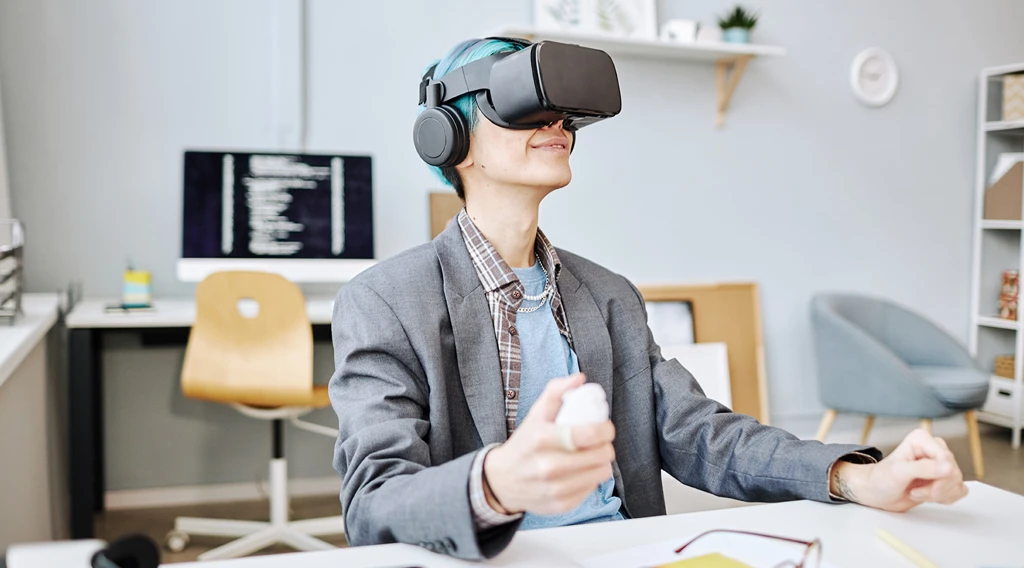
The digital landscape is shifting. We have moved past the era where immersive tech was just a buzzword for gamers. In 2026, spatial computing has become the standard, and the demand for creators who can build these worlds is at an all-time high. If you are looking to pivot your career, understanding the core requirements for virtual reality development is the first step toward building the future.
Becoming a VR developer isn't just about learning to code; it is about learning to think in three dimensions. You are no longer designing for a flat screen; you are designing for human presence. Therefore, this transition requires a specific blend of technical prowess and creative intuition. Let’s break down the foundational VR skills you need to thrive in this evolving industry.
Master the Engines: Unity and Unreal Engine
The heart of any VR project lies in the game engine. While there are several niche platforms available, two giants continue to dominate the professional space: Unity and Unreal Engine.
Unity remains a favorite for its accessibility and massive community support. It uses C# as its primary scripting language, which is generally easier for beginners to pick up. Because it is relatively lightweight, it is often the go-to choice for mobile-based AR/VR applications. If you want to build experiences that run smoothly on standalone headsets or smartphones, Unity is an excellent place to start.
On the other hand, Unreal Engine is the powerhouse of high-fidelity graphics. Powered by C++, it is the engine behind many AAA titles and photorealistic enterprise simulations. Its Blueprint visual scripting system lets you prototype complex logic without writing a single line of code, though a deep understanding of C++ remains vital for optimization. Choosing between them often depends on whether you value rapid iteration or cinematic visual quality.
The Art of 3D Modeling and Spatial Design
In a virtual world, everything is an object. Therefore, a solid grasp of 3D modeling is non-negotiable. Even if you aren't a dedicated 3D artist, you must understand how assets are constructed, textured, and rigged.
You should familiarize yourself with industry-standard tools such as Blender, Maya, or 3ds Max. Furthermore, understanding concepts such as polygon counts and Level of Detail (LOD) is crucial, as VR requires incredibly high performance. If your 3D models are too heavy, the frame rate will drop, and your users will likely experience motion sickness.
Furthermore, spatial design is about more than just aesthetics. You have to consider spatial UI, where menus aren't just buttons on a screen, but objects that exist in the world around the user. Learning how to guide a user’s attention using light, sound, and depth is a skill that separates hobbyists from professionals.
Programming Fundamentals and Math
While the engines do a lot of the heavy lifting, you still need a strong foundation in software engineering. Beyond just learning C# or C++, you need to understand vector math and linear algebra. Since you are dealing with objects moving through 3D space, you will constantly calculate distances, rotations, and trajectories.
Furthermore, you should understand how to bridge the gap between web and mobile environments. Many developers transition from traditional backgrounds into VR. While these frameworks are distinct from game engines, the logic of state management and API integration remains highly relevant. Being able to connect a VR headset to a cloud database or a web-based backend is a high-value skill in the enterprise sector.
Optimizing for Performance and Comfort
One of the biggest challenges in virtual reality development is the hardware constraint. Unlike a standard PC game, a VR application must render two different images (one for each eye) at a very high frame rate, usually 90Hz or higher.
To achieve this, you must become an expert in optimization. This involves:
Draw Call Batching: Reducing the number of times the CPU talks to the GPU.
Baked Lighting: Pre-calculating shadows so the processor doesn't have to do it in real-time.
Texture Atlasing: Combining multiple textures into one to save memory.
Beyond technical performance, you must design for human comfort. This includes implementing comfortable locomotion systems (like teleportation) and ensuring the horizon line stays stable. If the virtual world stutters or moves in a way the user’s inner ear doesn't expect, the experience is ruined.
Developing for AR/VR Applications
While we often focus on virtual reality, the lines between VR and Augmented Reality (AR) are blurring. Most modern headsets now feature high-quality passthrough cameras, allowing for Mixed Reality (MR) experiences.
When building AR/VR applications, you need to understand spatial mapping and environmental awareness. This means your software needs to recognize where a floor, a wall, or a table is located in the real world. Mastering SDKs like ARKit, ARCore, or the Meta Movement SDK will allow you to create apps that don't just replace reality but enhance it.
Soft Skills: Empathy and Iteration
Finally, do not underestimate the power of soft skills. VR is a deeply personal medium. To succeed, you must have a high degree of empathy for the end user. You are literally taking over their senses, which is a significant responsibility.
Furthermore, collaboration is also key. A typical VR project involves developers, 3D artists, sound designers, and UX researchers. Being able to communicate technical constraints to a creative lead or explaining a design vision to a backend engineer is what keeps projects on track. The ability to iterate based on user feedback is perhaps the most important VR skill, as what looks good on a monitor often feels very different once you put on a headset.
All in all, professional VR developers adopt a fail-fast mentality:
Rapid Prototyping: Build a greybox version of your environment using simple cubes and spheres to test scale and movement before the 3D artists spend weeks on high-fidelity assets.
Active Playtesting: You must be willing to put the headset on hundreds of times a day. If you aren't testing your own builds constantly, you aren't developing for VR; you’re just guessing.
Feedback Loops: Because every person's sim-sickness threshold is different, you need a diverse group of testers. Iteration involves taking that feedback and ruthlessly cutting features that don't serve the user’s comfort or the story’s immersion.
In short, while your math creates the world, your ability to listen and adapt is what makes that world worth staying in.
Conclusion
The path to becoming a virtual reality developer is challenging, but it is also one of the most rewarding journeys in tech today. By mastering engines like Unity or Unreal Engine, refining your 3D modeling abilities, and focusing on user-centric design, you position yourself at the forefront of the next computing revolution.
At Hul Hub, we specialize in native , react native , and Flutter mobile application services. Our expert teams work with you to develop the exact mobile application you desire. With our extensive coding experience and mobile app testing, we ensure each performance metric is met before launch. Book a call with us today to grow your business.